
After a most fabulous week of vacation with friends and then a less-than-ideal week after getting back, I have some feelings and thoughts. Be the friend who spontaneously picks up a bubble wand for your… More

America Recycles Day November 15
Since 1997, November 15 has been recognized as America Recycles Day, which is the only nationally recognized day to celebrate recycling and buying recycled content products and packaging.
THE NATIONAL RECYCLING RATE HAS INCREASED OVER THE PAST 30 YEARS.
BUT THE CURRENT RECYCLING RATE IS ONLY 34%.
WE CAN DO BETTER!
Here are a few resources to look into. As we enter the holiday season try to support recycling by purchasing products made from recycled materials. It makes a big impact. And remember that donating used goods that can still be used by others (clothing, household items, furniture, etc.) is a form of recycling that also directly helps people in need, so you kind of get double karma points on that!
Reduce your use of things that need to be recycled, especially items with excellent alternatives such as plastics like water bottles, plastic cups and other ‘take out’ related items. Carry your own water bottle. Decline plastic forks if getting take out to bring home, or bring your own cutlery.
https://www.epa.gov/recyclingstrategy/america-recycles-day
America Recycles Day
Let me know what sort of efforts you make already to recycle?
I pledge to make better use of local refill stores and reduce my plastics consumption on shampoo, conditioner and cleaning supplies. I will also make sure I go out of my way to purchase recycled products whenever possible. Will you pick something to commit to improving over the next year? Let me know what it is and inspire others!

Giving Tuesday
Giving Tuesday is the Tuesday following Thanksgiving and was introduced in 2012 to encourage charitable contributions during a time of much spending and consumerism in the United States.

It has since become a global effort and continues to grow each year.
The idea is not just about sending money to a charity, it is about giving time, sharing kindness, spreading the word about good causes.
Here are some charities or ethical companies I would like to share with you to support:
NAMI – National Alliance of Mental Illness
International Sanctuary and Purpose Jewelry
Childhelp
American Red Cross
Humane Society
Any local shelter in your area.
This post was not something I took the time to plan well, but prefer posting something imperfect in hopes of reaching at least a few people, rather than not trying at all. There are so many I would add that I am not thinking of right now.
Go give some good today! Whether it’s dropping your change in the red kettle in front of the grocery store, taking some old clothes to the thrift store, handing a blanket or food to a person on the streets. And if you can donate to an organization today the receives matching funds, that would be really great!
Add your favorite charities in the comments to help spread the word!
Never underestimate how much assistance, how much satisfaction, how much comfort, how much soul and transcendence there might be in a well-made taco and a cold bottle of beer.
— Tom Robbins
Let’s do ‘Black Friday’ a little differently?
Let’s face it, gift giving is fun. Every year leading up to the gifting season I promise I won’t give in to materialism, but once I see wrapping paper it’s all over for me.
I LOVE wrapping gifts, giving gifts, watching them be opened. It’s basically my favorite part.
I am that person who buys more small items versus one big present just so I can wrap more things to put under the tree or ship or hand out.
So here are some of my solutions to give some balance to my love of sharing presents and my strong desire to lessen my impact on the environment:
- Shop small and local as much as possible
- Buy recycled and re purposed whenever possible. Etsy is great!
- Buy things the recipient will actually use!
- When shopping online consolidate shipping as much as possible (for example, Amazon lets you choose one day a week for delivery)
- Support small businesses by getting gift certificates too. Helps get others to discover my favorite small businesses. Then get creative with fun ways to decorate for presentation!
- Buy hand made over mass produced. And choose items NOT made from plastic when there is an option. Amazon even has a hand made area to shop.
- Try to make something myself if I have the time and inspiration
- Think outside the box and look for unique items that support good causes.
Today I’m highlighting my local Habitat for Humanity Re-Store of the Greater Los Angeles area. They are having a Black Friday all November and inspired this post! Repurposed items and supporting a great cause! Consider supporting your local Re-Store this holiday season! (and all the time really).
And if you have one of those people on your list who are truly impossible to buy for because they have everything, I have one last suggestion. Make a donation to a cause in their name. Make it personal of something meaningful to them. And get creative with how you present it if you are like me and love the whole wrapping and unwrapping process!!
Is Silicone the new plastic?
Over the past several years there we have seen a lot of positive movement away from single use plastics, as well as the use of alternate materials instead of plastic.
For example, those disposable plastic zipper bags that are so prevalent in our kitchens. We now have zipper baggies made from silicone we can use to stash our sandwiches and snacks, and these can be washed and use over and over again. Great! Right?
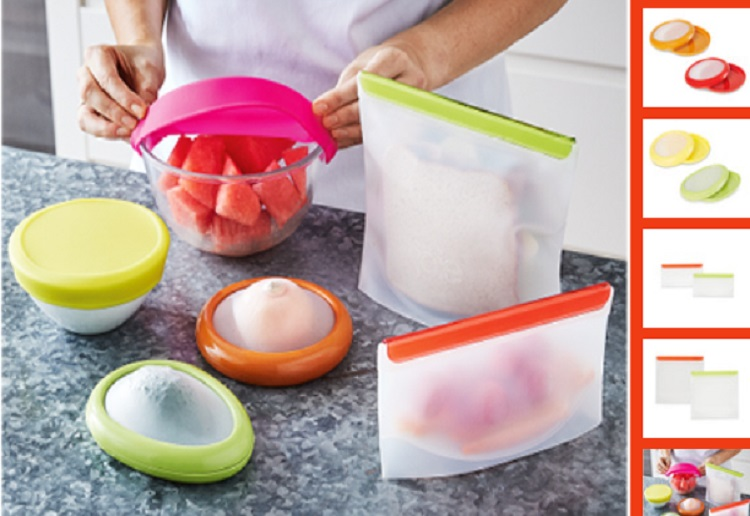
Well, of course it is great they are reusable rather than being added to our landfill after a few hours of containing something. Obviously, any time an item has a longer life span instead of being used once and tossed is a step in the right direction. Seeing silicone so often replacing plastic products I began to wonder how positive is this switch, really? Are we embracing silicone so quickly that it’s eventually going to become the new plastic in terms of waste and disposal issues? This is a subject I want to dig into deeper, and plan to write about this often.
I am passionate about learning more and sharing recycling myths, tips, do’s and don’ts and innovations. We have been given the ‘Reduce, Re-Use, Recycle’ mantra for a long time, and we seem to be in a growth phase of understanding better the reality of what each of those words can mean in our lives.
Back to silicone vs plastic: Here is the admittedly VERY oversimplified break down of what I have learned in quick search.
- Silicone is durable and often used to make alternatives to single use plastic products.
- While it is technically a recyclable material, it degrades when processed so it is actually considered down cycling.
- There are very few facilities reprocess silicone at this time.
- Silicone’s ability to withstand high heat makes it a great material to use in lots of products, yet not so easy to recycle.
- Silicone in landfills doesn’t seem to be as toxic as plastic, but it actually takes even longer to break down than plastic does.
I am curious to learn more about this and will share my education with you as I go. For me, I plan to keep thinking about the items I use and what the full life span of the materials are. The process from the raw materials to the end of life, as well as how many lives that material can realistically have, are important to me to consider.
What are your thoughts on silicone and how prevalent it is becoming? I would love to hear from you.
Have a Green Easter

Easter and Earth Day are always connected in my mind, both represent Spring and renewal to me. So I wanted to write about eco friendly ideas for Easter to honor Earth Day . You probably know by know I’m always looking for ways to reduce plastic in our lives. Easter is a good place to tackle a lot of unnecessary plastic. Baskets, filler, eggs, toys-so much plastic!!
But I am here to tell you there are alternatives!
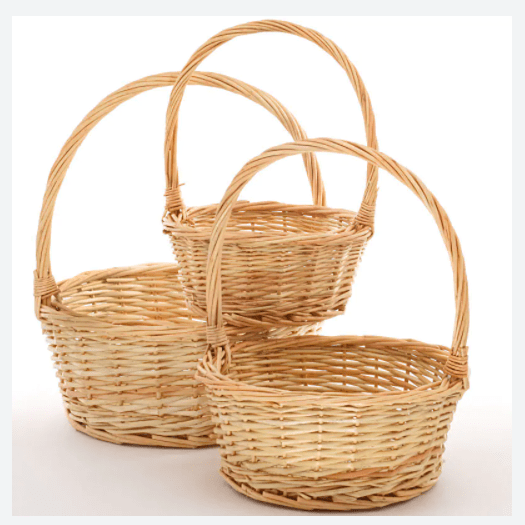
Baskets. Stick with the traditional woven baskets made of natural materials such as bamboo, seagrass, willow or even paper. Look for tutorials to make your own or dress up plain baskets. Challenge yourself to re purpose as much as possible. Use a canvas bag, jute bag or line a previously used plastic container to upcycle before sending it to the bin. The goal is always to shift our habits and mind set away from single use items.
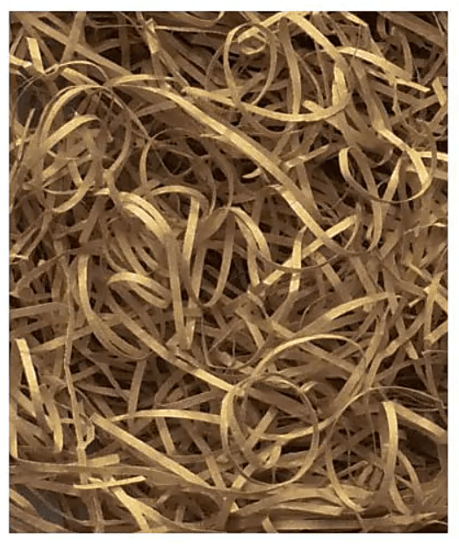
filler . Plastic grass should be a thing of the past, there is no reason to buy or use that stuff ever again. There are many paper options, in a variety of colors and neutral tones, look for recycled materials whenever possible! Or use your own shredded paper if you have some. If you really want to take it to the next level try using real grass, lettuce, straw or flowers. Just make sure it’s safely age appropriate or ok to come in contact with edibles.
Eggs, etc. This is where we really get to start having all the fun! The colors, textures and whimsy brings it all to life at this point, and there earth friendly options like never before! There are solid wooden eggs, hollow wooden eggs, and flat egg shaped wood craft projects! If you must have plastic refillable eggs, at least try ones that are made from recycled plastic, if you or someone you know does not already have some leftover from previous years. Remember it doesn’t help to toss out plastic you already have to replace it with something more environmentally friendly if it’s still in good shape. Replace only it when necessary with a better option!
Love real eggs and and the traditions of decorating, hunting and eating them? We can make that kinder to our planet also! Start with purchasing only cardboard egg cartons, and skip dye the kits with those plastic cups. Use small bowls. Hit a local thrift store, you’re sure to find some fun choices you won’t mind the little ones playing with. There are kits with earth friendly dyes and lots of tutorials on the internet on how to dye eggs using food like beets and teas. Experiment, try your own ideas with anything that is safe to eat and see how creative you can get.
Activities. Fill baskets with long lasting treats like books, crafts and toys that are environmentally gentle. Think wood, metal, fabric and anything upcycled or recycled. Etsy has lots of handmade items that can be cherished for a long time. Start an annual tradition of planting flowers or trees or starting a garden.
Sweets. Personally, I always need a big jar of Jelly Belly’s around and some Peeps (which are decoration not food in my opinion!) but making and decorating cookies can be a really fun a tradition for Easter!
Keeping it green doesn’t mean you do it perfectly, it means you make as many earth friendly choices as possible.

3 myths about recycling — and what we’re all doing wrong
from ‘Today’ by Elyse Pham
It’s been a while since I posted anything, this was a good reminder for me, so I am sharing.
The recycling industry has a counter intuitive catchphrase, according to David Biderman, executive director of the Solid Waste Association of North America: “When in doubt, throw it out.”
“There are a lot of people who are what we refer to as wishful or aspirational recyclers,” Biderman told TMRW. “They say, ‘Well, this must be recyclable. This is a GLAD plastic container.’’”
In reality, this mentality makes it less likely that successful recycling takes place — all the more unfortunate when you realize how little recycling is even attempted at all. According to the Environmental Protection Agency, only 30% of plastic water bottles are recycled.
To help us become more intentional in our eco-friendly habits, TMRW spoke with experts Biderman and David Keelig, president of the National Recycling Coalition, about the biggest recycling myths and misconceptions.
Myth: You should throw anything that you think might be recyclable into the recycling bin.
Is it OK to recycle that plastic container with a half-eaten salad in it? Or that old garden hose, or those batteries? You might think that it’s better than sending them straight to the landfill. But items that are nonrecyclable — or even just dirty — don’t magically transform when they get to the recycling facility.
In fact, the biggest problem for those facilities is contamination, or nonrecyclable materials entering the system, said Biderman. The leftover salad, for example, not only contaminates its own plastic container, but also the other recyclables in the bin.
“There is about a 20% contamination rate in the United States,” he explained. “So 20% of the processing capacity that is being used at a typical recycling facility is being used to process stuff that has to go to a landfill.”
A good rule of thumb is checking that everything you recycle is “clean, loose and dry,” Biderman said.
“You know what, this water bottle is recyclable, but I can’t throw it in a recycling bin,” he said. “If it’s filled with water, I need to empty it out.”
This calculus will save recycling facilities time, energy and $50 to $100 per ton — ensuring that their resources go toward real recycling efforts.
Myth: All plastic is recyclable.
When China passed the “National Sword” policy in 2018, banning the import of recycled consumer plastics along with other types of waste, it sent shockwaves through the recycling industry. The United States used to export most of its recycled plastic to China; suddenly, the industry was scrambling to handle hundreds of thousands of tons domestically. In the first couple of months, lots of recycled plastic went to the landfills.
Luckily, the market has since adapted, and new domestic facilities have popped up that are willing to accept and process plastic.
That is — certain kinds of plastic.
Plastics are classified into numerical categories, or resin-identification codes, based on the materials of which they’re made. You can usually figure out which category an item falls into by looking for the classic ‘chasing arrows’ recycling symbol somewhere on its surface. The symbol will have a number in the middle.
According to Keelig, the 1s and 2s are always recyclable. These include everyday items, like soda, Gatorade and water bottles, as well as jugs of laundry detergent, dish soap and milk.
“That’s about 80% to 90% of the marketplace for plastics,” said Keelig. “So if we just recycled those items, you could do a lot of great things and accomplish a lot in terms of recycling.”
However, “National Sword” posed a bigger problem for plastics in the 3 to 7 categories, which experience a much lower domestic demand.
Keeling and Biderman name yogurt containers, plastic grocery bags, plastic wrap, PVC pipe and toys as items that are commonly thought of as recyclable in curbside programs — and that were recyclable, up until 2018. Now they just clog up the system, and if you try to recycle them, they’ll likely end up in the landfill anyway. Instead, you should find ways to reuse them at home, or find alternative recycling platforms.
For example, many retail stores collect and recycle grocery bags and other plastic films. There’s also TerraCycle, which specifically processes hard-to-recycle materials.
The exact rules on which plastic numbers you can recycle also vary based on where you are in the United States. “It’s very community specific,” said Biderman. “You have to look it up on the Internet, or get communication from your garbage company or the local government.”
Myth: Recycling begins and ends at the recycling bin.
According to Biderman and Keelig, knowing how to recycle correctly is only the first step in becoming more waste conscious. We should also adjust our consumption patterns — like what we’re consuming and how much — before recycling even enters the picture.
“Number one, people should consume less,” said Biderman. “The reason we have problems in the waste and recycling system is because we generate so much waste. People need to be more mindful of what they’re generating and generate less.”
This means investing in reusable bags, containers, water bottles, drinking straws and kitchen towels, to name a few.
Keeling also emphasized the importance of purchasing recycled goods, thereby boosting the recycling industry as a whole. Many paper, aluminum and plastic products are made out of recycled content.
“Just know, you’re not recycling until you buy recycled,” said Keelig. “We all vote with our pocketbook. So think about what you’re buying in terms of recyclability.”
Is it all too much?
Becoming plastic free or zero waste sounds like a great goal, but is it realistic?
I’m not discouraging the idea, but want to propose we are careful about how we think about it. Setting such a lofty goal can back fire when it becomes overwhelming.
Goals need to be kept attainable or we falter in continuing to pursue them. It’s human nature. No one wakes up one day and decides they are climbing Mt. Everest the next day, they know if that is the goal it will take time and increased incremental effort to get there.
We have a Mt. Everest of bad habits to overcome about how we treat this wonderful planet of ours. And while it is quite urgent that we do so, it is also extremely overwhelming to consider dealing with. Try not to let the urgency derail your efforts by making you feel you are not doing enough.
Some is better than none, and it is a good place to start. We didn’t get here in a blink of an eye and we won’t get out of it in a blink either.
Start with the easier things and keep building on it. Consistency and increased effort are going to be the key because we need to change our whole mind set. Don’t feel discouraged and think that your small efforts are not making a difference, because enough of us doing even the tiny things can help. And we keep it up, go from tiny things to small things, keep working on it.
You also have to do things that work for your life and income to find where and how you make the most impact.
A stay at home parent with several kids might struggle giving up certain convenient single use products which really make their hectic life easier and fit into the household budget. So, their changes might show up stronger elsewhere like packaging reduction on often used items such as laundry and cleaning products, less brand-new clothing since kids grow so fast anyway and toys made from non-plastic sources.
A business executive who travels a lot might not be able to reduce air travel in their life without risking how they make a living, but can put more effort into decreasing their impact in other ways, such as not using plastic when traveling. Bring your own cutlery, straws and refillable bottles, decline refreshments on the plane that use plastic. This person could drive a hybrid or electric car to reduce their carbon footprint when at home and purchase more eco friendly products.
A construction worker can’t drive an electric compact car, or take public transportation because they need to take tools and materials to jobsites. So that person may put extra effort into buying produce at the local farmers market and bring their cotton bags, carry lunch in reusable containers instead of grabbing take out as much as possible and other efforts in their home whenever possible.
When you feel like your one small effort is NOT enough, consider this:
Maybe the person in line behind you noticed your refusal of a plastic grocery bag because you brought your own and saw how simple that was. Maybe that person decides the 3 things they are purchasing can be carried out without a bag and they remember to bring a bag the next time. Maybe the next time you pull out your reusable straw or bring your own cutlery instead of using plastic you inspire someone else to make that change. Or you tell someone who never heard of it that there are such things as toothbrushes made from bamboo and dental floss that comes in non-plastic refillable containers.
And while we are making changes ourselves, we need to keep putting pressure on companies and people in power to make BIG changes happen. That is where the real results will come from, but all of our small efforts matter too. Keep it up, no matter what.
There are five R’s to consider.
Reduce, reuse, recycle but more importantly, RETHINK and REFUSE.
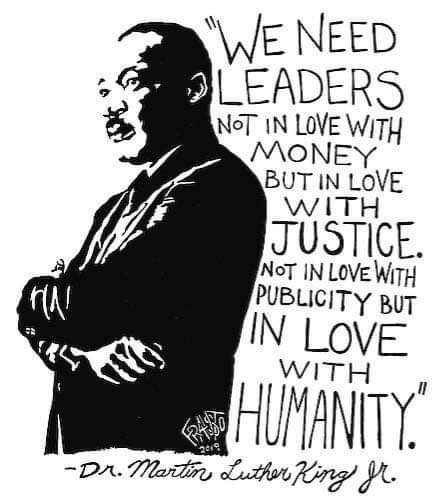
Honoring Martin Luther King Jr
Is there an app for that?
Have you ever used one of those calorie counting apps, or a food diary? You know, the kind of tool that helps you understand how much you are consuming so you know what you need to burn off to lose weight or be healthy?
Wouldn’t it be cool to have an app or something like that for your carbon footprint to help encourage little changes? Think of all the people, like myself, who have a Fitbit telling us how many steps we take each day. What if I walk somewhere instead of drive and I could count those steps additionally as part of my carbon offset? What if we had a carbon budget we should try to adhere to, weekly, monthly – I don’t know, maybe lifetime – and could record things that impact that budget?
Just like you record what you had for lunch, what if you also record if you brought it to work in your own reusable container and didn’t use plastic cutlery to eat it? How about the next time you use a plastic cup the app could tell you something else you can do to offset that impact, like the calories you need to burn after eating a cupcake?
I know! More of a list system, like the ‘Eat this, not that’ food advice!
DO this: bring your own straw, use paper straw, or skip it altogether.
NOT this: use a plastic, one time use, then it is litter forever straw.
DO this: bring your own reusable cup back out for your coffees, smoothies, etc.
DO this: make your own coffees, juices, smoothies at home in a reusable tumbler.
NOT this: get a new disposable cup every time you get a coffee, smoothie, drink to go.
It could be made fun with points and rewards for each time an environmentally friendly choice is made. A game for kids to teach them how to make choices based on how they impact the planet?
Somebody much smarter than me please develop this idea!
Random
It can be hard sometimes to sit down and write for this blog. I know what sort of information I want to share, I am passionate and enthused; about the subjects I want to discuss and the technology that allows me to reach out to others in such a simple way.
Sometimes it is hard because I am overwhelmed with such a variety of ideas and subjects that choosing what to focus on is nearly impossible. Other times, I may pick a subject and start writing just fine, then suddenly realize I have spun down the rabbit hole of research and back links for over an hour and still not even written two full paragraphs!
These are the distractions that cause me to avoid sitting down to the keyboard and write in the first place. The excuse maker – “I don’t have time to research” “I should write about subject x before subject y”. The self critic, wondering what makes me think anyone cares what I have to say about any subject in the first place, I am no expert, I am not a writer. But I do it anyway and will keep doing it. Why?
Because I am someone who cares about this planet, and all the wonderful living things on it (humans, animals, plants, fish, trees, flowers, insects – you get the idea). I care about learning to treat this planet more gently. I care about our ability to be kind and to and help one another through life, because life gets messy and dirty and hard sometimes, but it is also full of beauty and love. I believe that learning to be a better person and better steward of this earth is a never ending process to be embraced with joy and gratitude. I believe in run-on sentences, lots of commas and good spelling. I enjoy learning more and trying harder. I want to share what I learn with others. I try to treat others as I prefer to be treated; encouraged towards growth without judgement, with kindness, humor, love and always, always appreciation. Gratitude is the key to happiness in my own humble opinion.
I appreciate quirky personalities, different cultures and cuisines. I love diversity and learning through other peoples experiences as well as my own. I will never tire of looking at someone else’s vacation pictures (especially if they are nature shots), but you will tire of looking at mine because I take SO many. There is no sound more magical on this earth than the pure, spontaneous laughter of a baby.
I am a contradictory person: I always want to do better, learn more, read more, exercise more, eat more and sleep more all at the same time. And I think most people are as complicated yet simple inside as well, just with their own particular list.
Environmental issues and the climate crises are really, really important to me and those are the subjects you will find me mostly going on about, here and in my everyday conversations. That doesn’t mean I live some perfectly carbon zero life. I don’t own a hybrid vehicle or have somehow found a way to live a plastic free life, but I am trying. I keep working on reducing my impact in ways that I can, learning more about ways that I can and sharing with others. We all have our own paths to walk and what it looks like to make a gentler impact is also different for each of us.
I feel like I just spun down the rabbit hole again. This time a stream of consciousness that really had no direction or purpose other than to express myself. But, hey, it’s my blog and if that is what I felt like doing with the time I have today, I can do that!
 Cassandra Complex